It happened on a Sunday night, of course—when most offices were closed and the kitchen sink was piled with dishes. Matt bit down on a roasted almond and heard a tiny “crack,” the kind of sound you don’t want to hear from your own mouth. At first, it felt like a grain of sand had wedged between his molars. Then came the sting when he tried to chew again. He stood there, tongue searching the sharp edge, already picturing the week ahead. Is this going to hurt all night? Can it wait until morning? Is this a crown, a filling, or something worse?
If you’re reading this because you just chipped or cracked a tooth—or you’ve got a toothache that flares when you bite down—you’re not alone. Patients in Alpharetta land in this situation every day, and the first hour matters more than you think. This guide is a calm, practical walkthrough of what to do right now, what to avoid, and how we approach your first visit so you leave comfortable and clear on the plan.
What’s Really at Stake (It’s More Than “A Broken Tooth”)
It’s not the chip itself that keeps you up—it’s what it interrupts. Your morning coffee, the quick bite before a meeting, saying yes to dinner without scanning the menu for “soft.” The real problem is uncertainty: Do I need a crown? Can I save the tooth? Will this derail my week? Our job is to turn uncertainty into a clear path—relieve pain, protect what’s healthy, and choose the most conservative, durable fix that fits your life.
First Hour Playbook: Do This, Not That
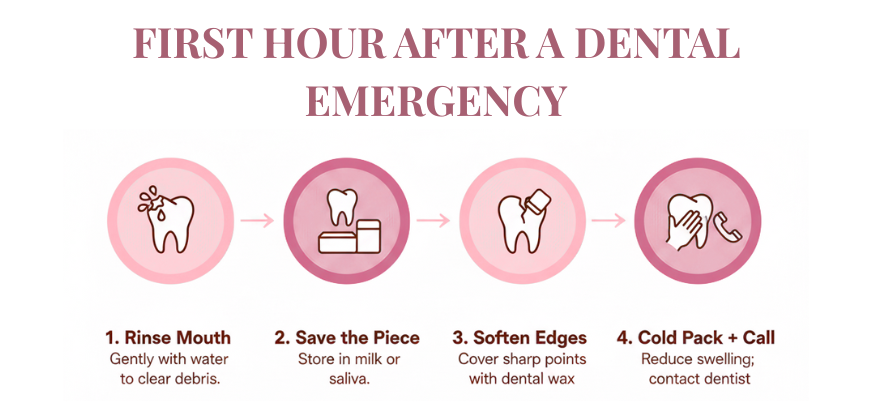
Rinse, then look (don’t poke). Swish with lukewarm water to clear debris. If you see a rough edge, resist the urge to “test” it with hard foods. Your tongue will want to investigate; try not to aggravate the area.
Save the piece if it broke off. Find and keep any fragment in a clean container. Sometimes we can bond a piece back if it fits like a puzzle.
Temporary cover for sharp edges. If a corner is snagging your cheek or tongue, a tiny ball of orthodontic wax (or sugar-free gum in a pinch) can soften the edge until we see you.
Cold helps swelling, not heat. Apply a cold pack on your cheek in 10-minute bursts. Skip heat and alcohol—the goal is to quiet inflammation, not invite more.
Pain relief, smartly. Over-the-counter options can help you sleep, but avoid placing gels directly on a cracked area; numbing agents can irritate soft tissues if misused.
Call us—same-day slots exist for this. We reserve time for urgent care because that’s real life. Start here: Emergency Dentistry.
Why It Hurts When You Bite (and what that hints at)
A “high spot” after recent work
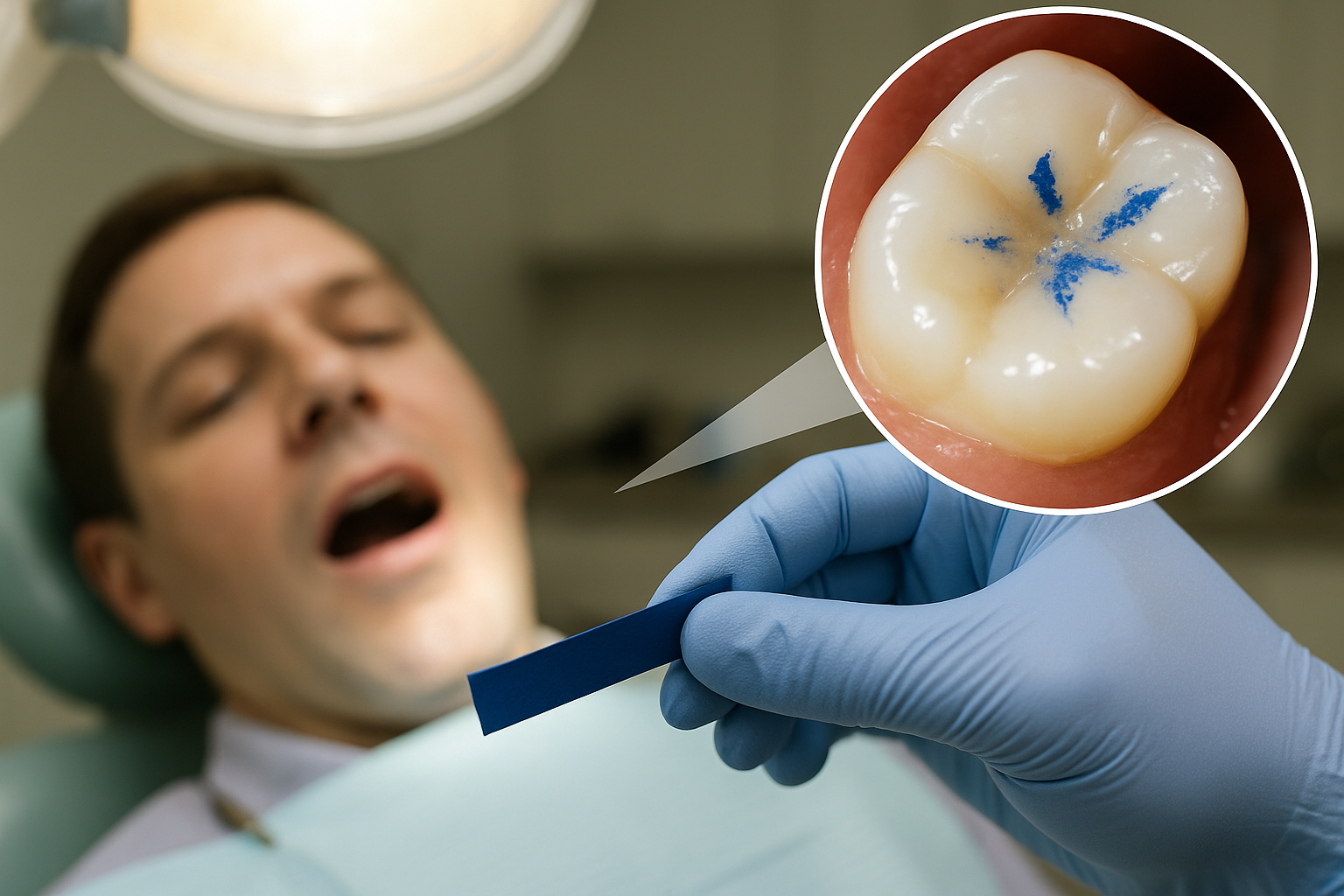
If you’ve had a recent filling or crown, a microscopic high point can overload one cusp—like a pebble in your shoe. The ligament that suspends your tooth gets sore, so biting zaps you while temperature feels normal. The fix is often a quick, precise polish that takes minutes.
A cracked cusp (the “door hinge” effect)
A thin crack lets that piece flex when you chew—open, pain; release, relief. Cold may be fine; pressure is the trigger. Stabilizing the tooth with a well-fitted dental crown (or sometimes a conservative onlay) acts like a seatbelt so the crack can’t open with every bite.
A hidden cavity near an old filling
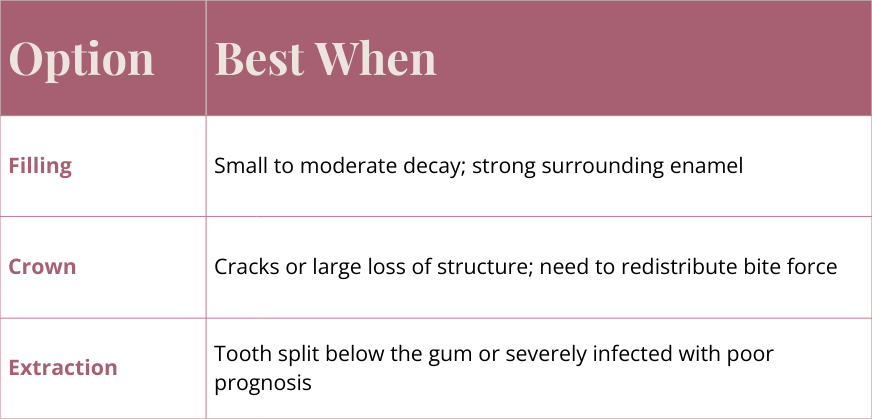
Decay can creep under margins you can’t see. When the foundation softens, biting pushes on a thin top layer and it protests. Treatment ranges from a bonded filling to a crown, depending on how much strong enamel remains.
Bruised ligament from clenching or hard chewing
Weekend stress, new workout jaw tension, or a streak of crunchy foods can leave a tooth tender to pressure. A bite tune-up, softer foods for a couple of days, and (if needed) a custom nightguard help the ligament calm down.
“Can It Wait?” The Honest Answer
If your pain is mild and intermittent, you might make it through the night. But here’s the risk trade-off: cracks spread, sharp edges cut cheeks and tongues, and pain rarely picks a convenient moment to return. Early visits are almost always simpler, less invasive, and more affordable than the “wait and see” version. When in doubt, ask—we’ll tell you straight.
What Your First Visit Looks Like
A calm start
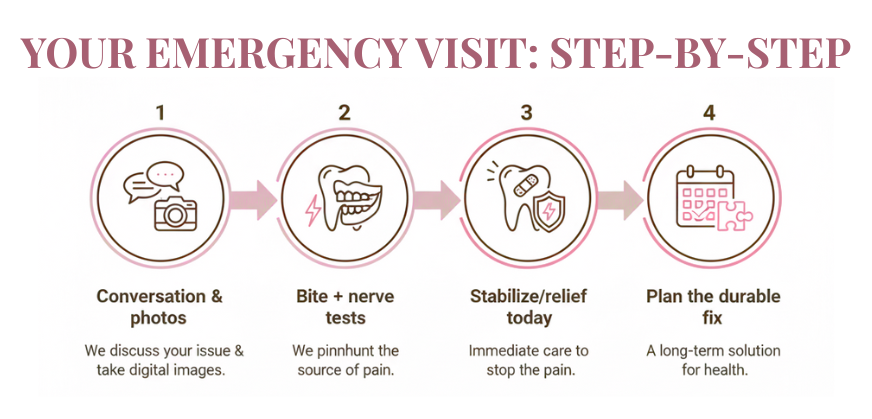
We talk first. When did the pain begin? What sets it off—chewing, cold, sweets? Any recent dental work? This conversation narrows the possibilities before we even pick up a mirror.
Gentle tests that give clear answers
We take close-up photos, lightly tap to check the tooth’s ligament, use thin bite paper to see which cusp carries extra force, and do a brief temperature test to understand how the nerve responds. You’ll see the images we see, with straightforward explanations.
A clear plan forward
If a small repair will truly last, we’ll recommend that. If a crown is the best way to stop a crack from flexing, we’ll show you exactly why. And if the tooth can’t be saved (rare, but it happens), we’ll map out comfort today and a healthy replacement plan for tomorrow—often a single tooth implant when you’re ready.