The Morning Coffee That Changed Everything
Emma noticed it on a Tuesday morning, the kind of ordinary day that usually blends into the next. She wrapped her hands around her mug, took a hopeful sip of coffee, and then froze mid-swallow. A sharp, electric jolt shot through her back tooth, fast and startling, like biting into ice when you were not expecting it. She lowered the mug slowly, blinking, thinking, That was weird… maybe it was just too hot.
It was not. Later that afternoon, a cold sip of water triggered the same zing. By dinner, even a breath of cool air through her mouth made her flinch. Tooth sensitivity had officially entered her life, and it brought questions with it. Was something wrong? Was this the start of a bigger dental problem? Or was it just one of those annoying things that comes and goes?
If you have ever had that sudden sting when eating ice cream, drinking coffee, or brushing a certain spot, you know the feeling Emma is talking about. Sensitive teeth have a way of sneaking up on you, turning everyday moments into small tests of bravery.

Why That Sharp Zing Feels So Intense
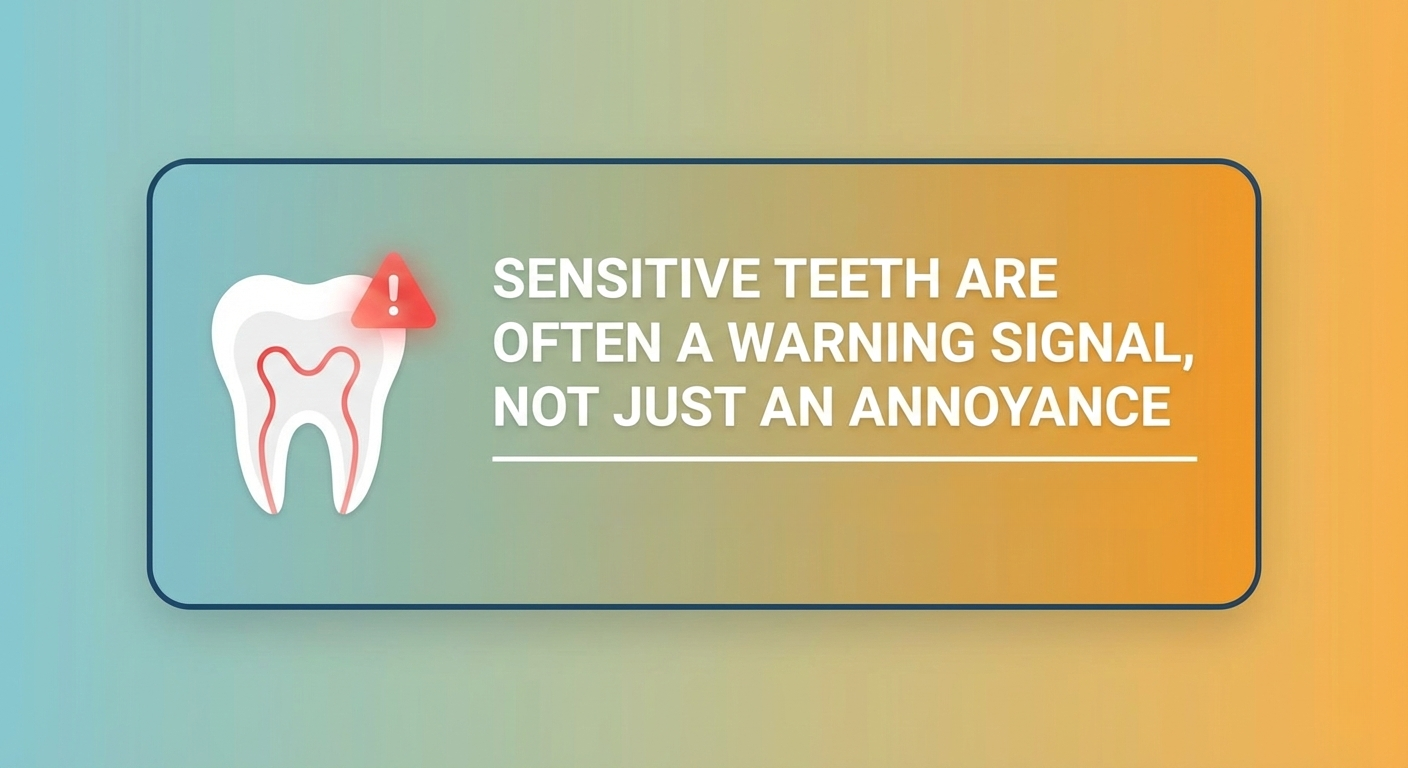
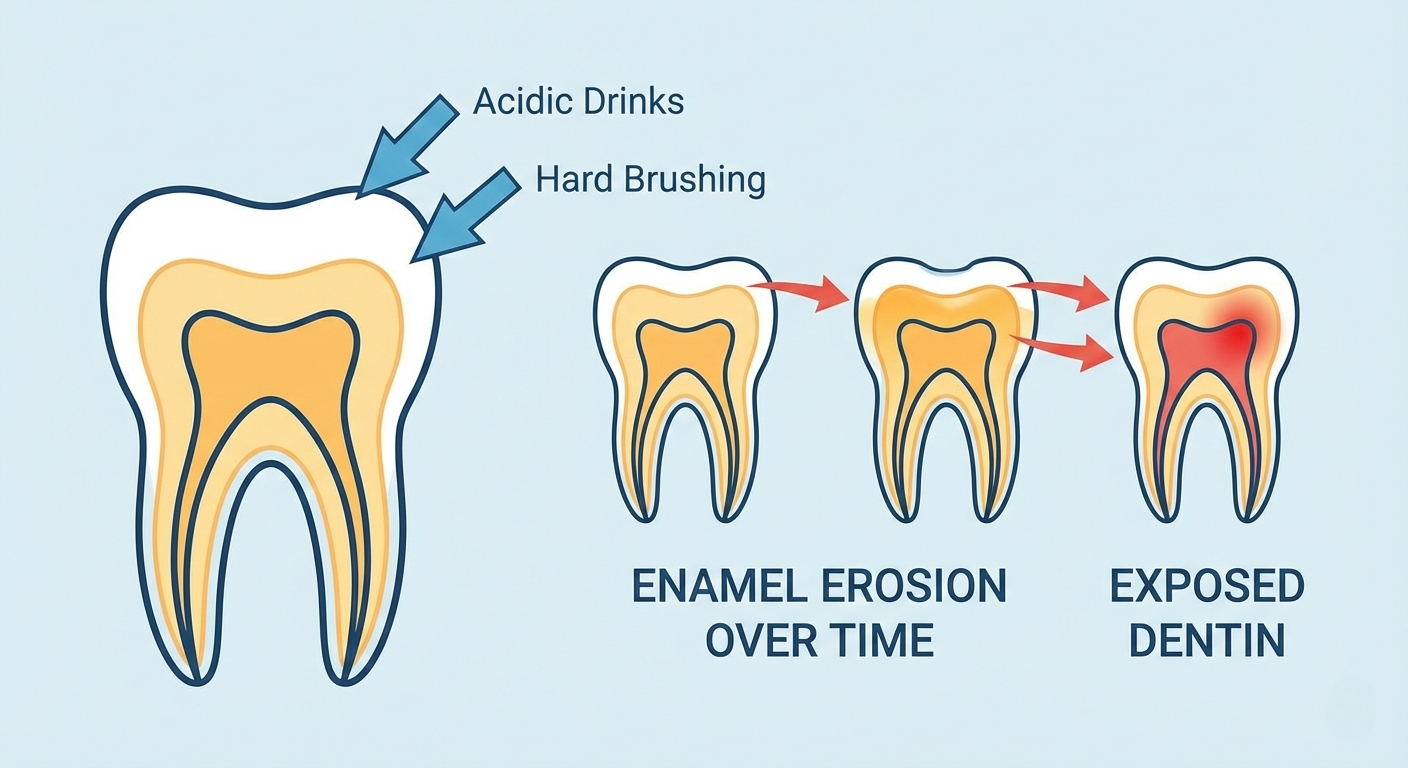
What surprised Emma most was how fast the pain hit and disappeared. It was not a dull ache. It was more like touching a live wire. That intensity comes from how teeth are built. Under the hard enamel surface lives dentin, a layer filled with microscopic channels that lead straight to the nerve.
Think of dentin like a bundle of tiny drinking straws. When enamel thins or gums pull back, those straws are exposed. Hot, cold, sweet, or acidic foods rush down those pathways and tap directly on the nerve. Your brain reacts instantly, which is why tooth sensitivity feels so dramatic even if the tooth looks perfectly fine in the mirror.
Emma Googled “why do my teeth hurt when I drink cold water” at midnight, scrolling through explanations that felt half comforting and half terrifying. The good news she learned is that tooth sensitivity is common. The more important truth is that it always has a reason, and those reasons matter.
When Enamel Wears Down Without You Noticing
Emma brushed twice a day. She flossed most nights. She assumed enamel loss only happened if you ignored your teeth completely. That assumption is one of the biggest surprises for patients. Enamel can wear down quietly, even when you are doing your best.
Aggressive brushing with a hard bristle brush, whitening products used too often, and acidic foods like citrus, soda, and sports drinks can slowly thin enamel over time. It is like sanding a tabletop just a little bit every day. You do not notice the change until suddenly the surface feels raw.
Emma realized she had been scrubbing harder lately, convinced that more pressure meant cleaner teeth. In reality, gentle and consistent wins every time. This is something we often talk about during routine visits at Method Modern Dentistry when patients come in for preventative care and mention new sensitivity. Small habit changes can make a big difference when caught early.
The Quiet Role Gums Play In Sensitivity
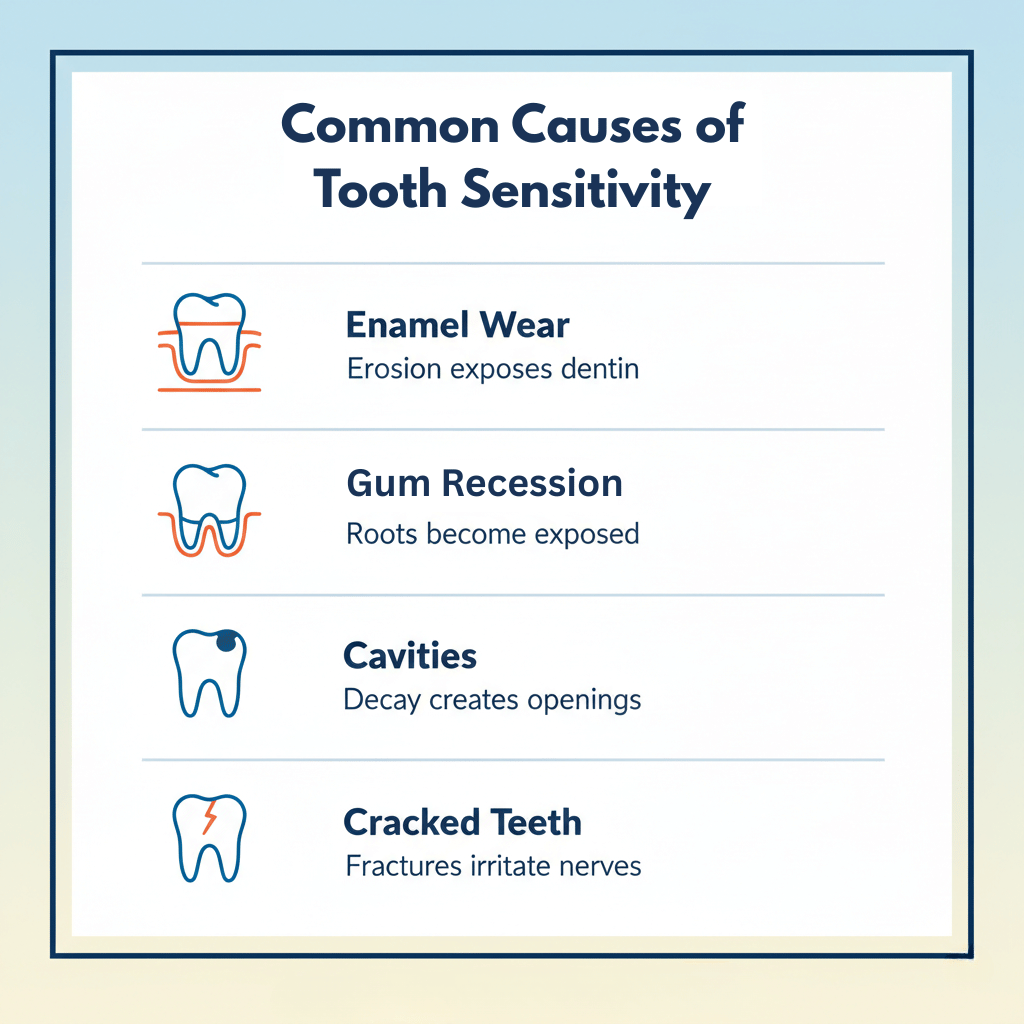
What Emma did not expect was her dentist mentioning her gums. She thought this was a tooth problem, not a gum one. But gum recession is one of the most common causes of sensitive teeth. As gums pull back, they expose the softer root surface of the tooth, which has far less protection than enamel.
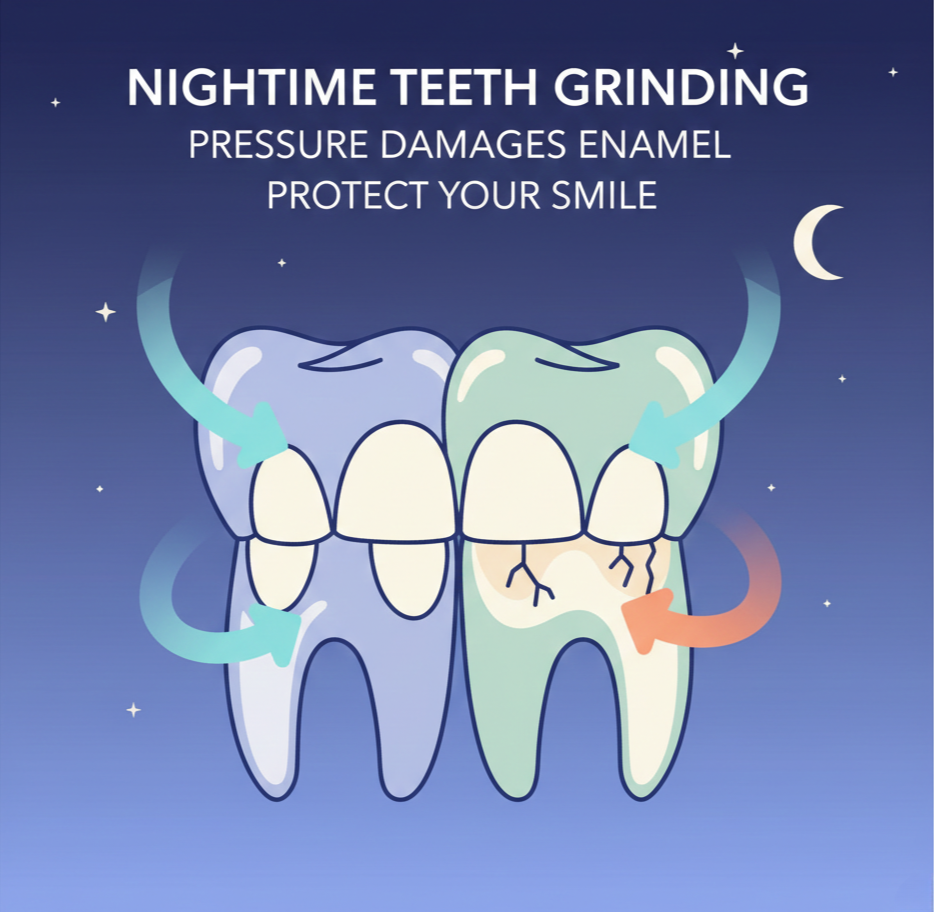
This exposure is why sensitivity often shows up near the gumline. It also explains why certain spots hurt more than others. Gum recession can come from genetics, grinding, clenching, or brushing too hard. It does not always mean gum disease, but it is always worth paying attention to.
During exams, we often show patients exactly where recession is happening and why it matters long-term. Left alone, sensitivity can turn into something more serious, like decay on the root surface. That is when a simple twinge becomes a real dental issue.
The Moment Emma Realized It Was Time To Ask
Emma almost canceled her appointment. The pain was annoying but not constant, and she told herself she was probably overreacting. Sitting in the waiting room, she admitted something quietly to herself. The uncertainty bothered her more than the pain.
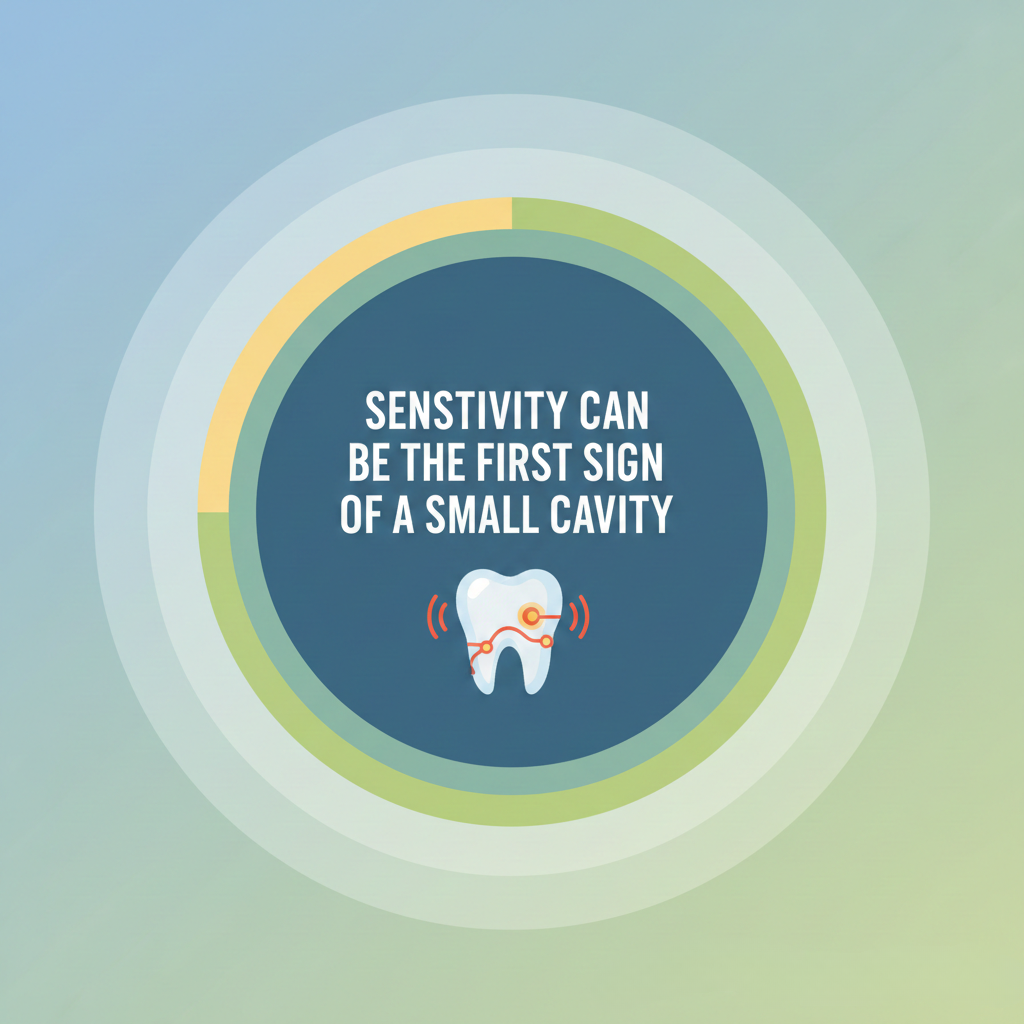
That moment is often when patients decide to come in. Not because the pain is unbearable, but because not knowing feels worse. If you are in that space, a quick evaluation can bring clarity and relief. At Method Modern Dentistry, we see sensitivity as a starting point for a conversation, not a lecture. Sometimes it is as simple as adjusting brushing habits or recommending a desensitizing toothpaste. Other times, it uncovers something that needs attention, like a small cavity or an old filling that no longer seals properly.
If sensitivity is paired with sharp pain when biting, it could even point to a tiny crack, something we evaluate carefully during exams and imaging.