






Expert dental tips, news, and smile advice
What Causes Sensitive Teeth And Why It Suddenly Hurts



February 9, 2026
•
5 min read
Share this post:







The Morning Coffee That Changed Everything
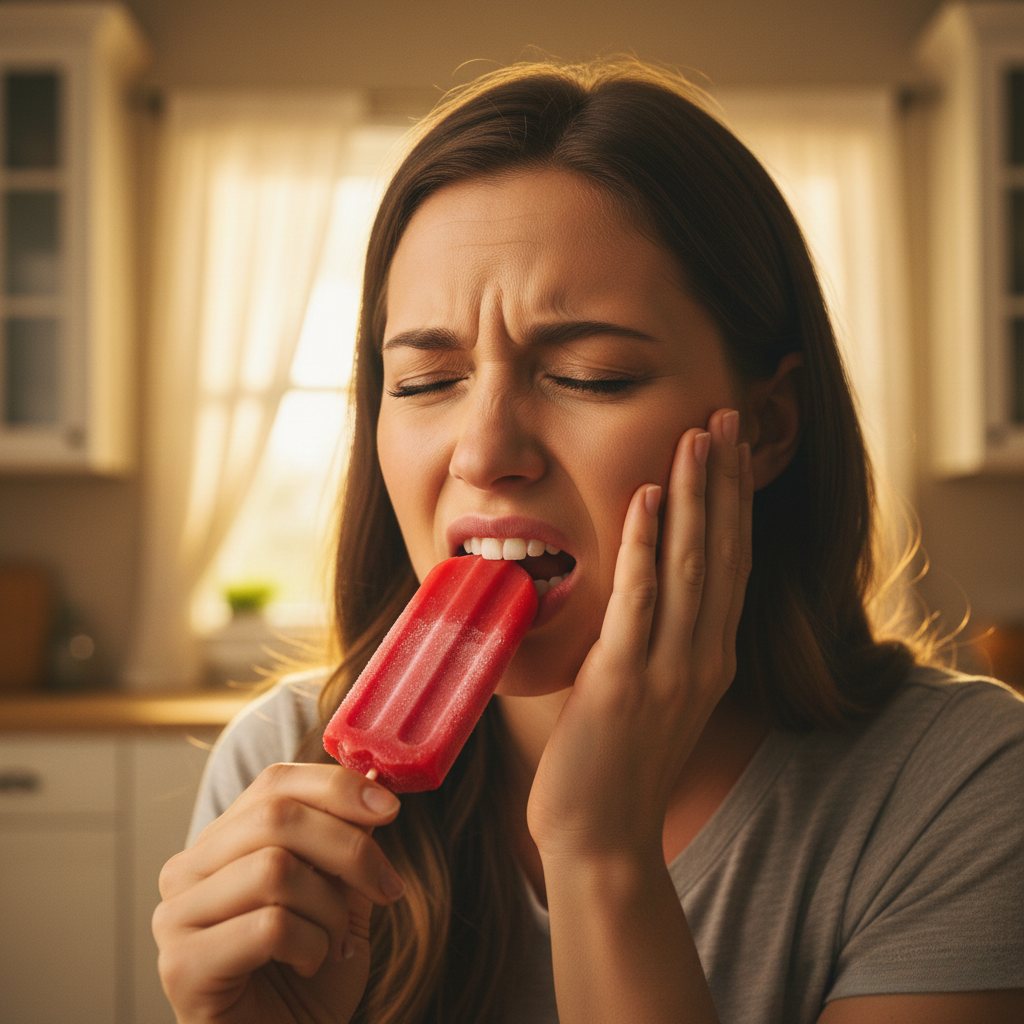
Emma noticed it on a Tuesday morning, the kind of ordinary day that usually blends into the next. She wrapped her hands around her mug, took a hopeful sip of coffee, and then froze mid-swallow. A sharp, electric jolt shot through her back tooth, fast and startling, like biting into ice when you were not expecting it. She lowered the mug slowly, blinking, thinking, That was weird… maybe it was just too hot.
It was not. Later that afternoon, a cold sip of water triggered the same zing. By dinner, even a breath of cool air through her mouth made her flinch. Tooth sensitivity had officially entered her life, and it brought questions with it. Was something wrong? Was this the start of a bigger dental problem? Or was it just one of those annoying things that comes and goes?
If you have ever had that sudden sting when eating ice cream, drinking coffee, or brushing a certain spot, you know the feeling Emma is talking about. Sensitive teeth have a way of sneaking up on you, turning everyday moments into small tests of bravery.

Why That Sharp Zing Feels So Intense
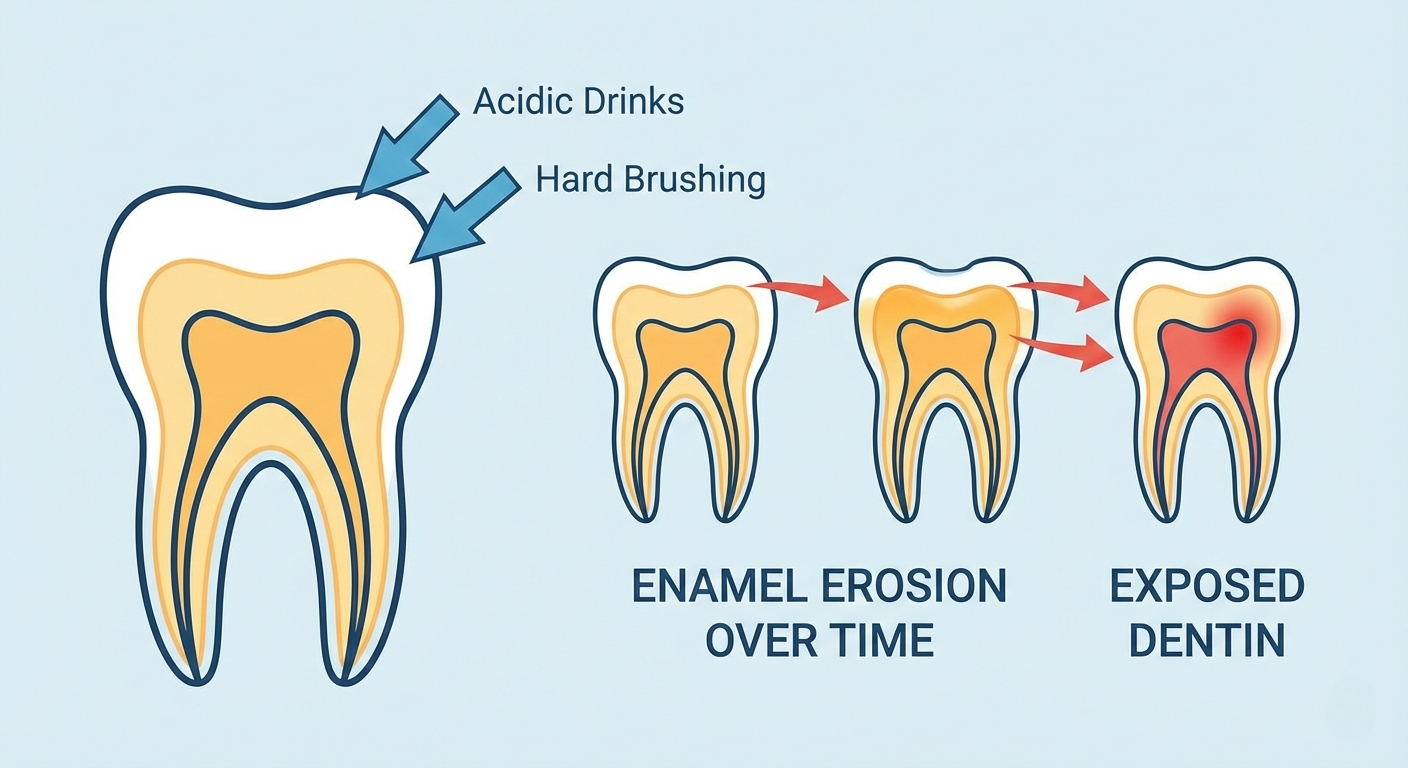
What surprised Emma most was how fast the pain hit and disappeared. It was not a dull ache. It was more like touching a live wire. That intensity comes from how teeth are built. Under the hard enamel surface lives dentin, a layer filled with microscopic channels that lead straight to the nerve.
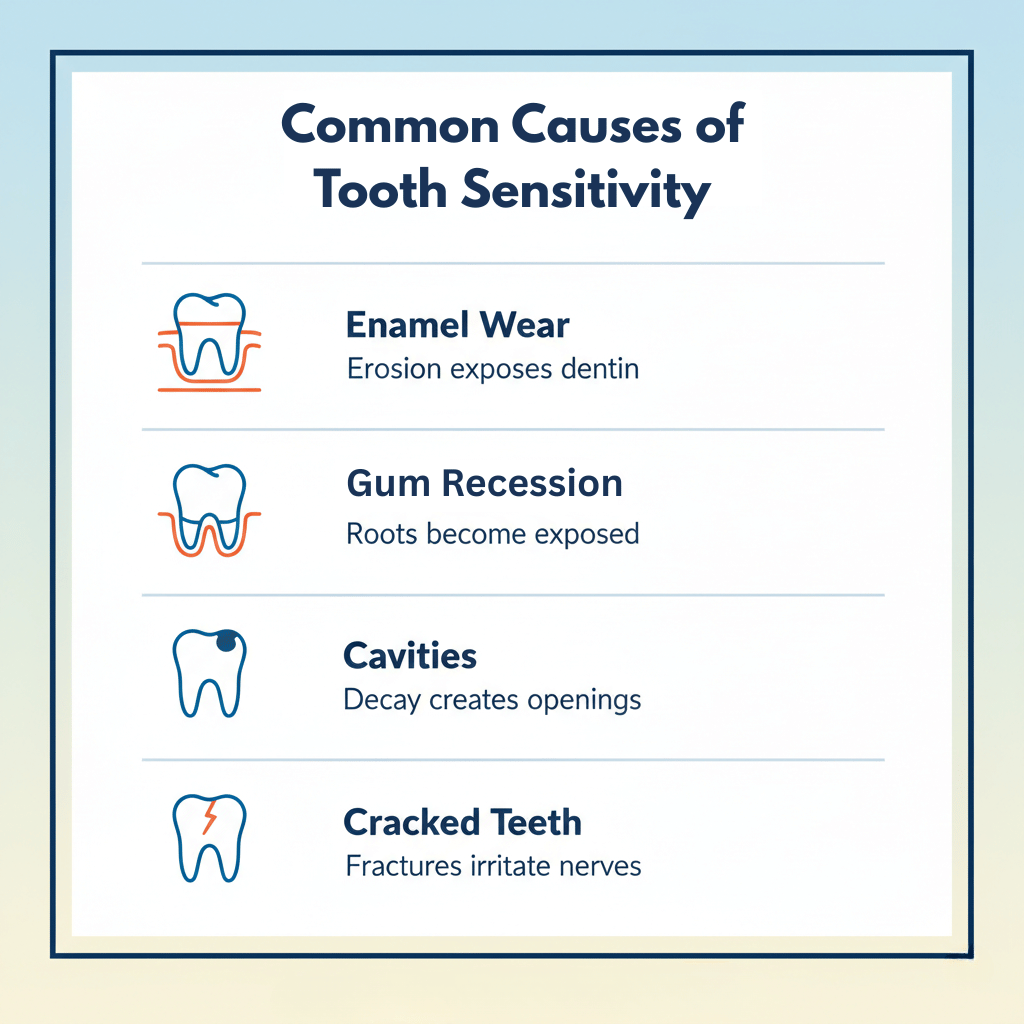
Think of dentin like a bundle of tiny drinking straws. When enamel thins or gums pull back, those straws are exposed. Hot, cold, sweet, or acidic foods rush down those pathways and tap directly on the nerve. Your brain reacts instantly, which is why tooth sensitivity feels so dramatic even if the tooth looks perfectly fine in the mirror.
Emma Googled “why do my teeth hurt when I drink cold water” at midnight, scrolling through explanations that felt half comforting and half terrifying. The good news she learned is that tooth sensitivity is common. The more important truth is that it always has a reason, and those reasons matter.
When Enamel Wears Down Without You Noticing
Emma brushed twice a day. She flossed most nights. She assumed enamel loss only happened if you ignored your teeth completely. That assumption is one of the biggest surprises for patients. Enamel can wear down quietly, even when you are doing your best.
Aggressive brushing with a hard bristle brush, whitening products used too often, and acidic foods like citrus, soda, and sports drinks can slowly thin enamel over time. It is like sanding a tabletop just a little bit every day. You do not notice the change until suddenly the surface feels raw.
Emma realized she had been scrubbing harder lately, convinced that more pressure meant cleaner teeth. In reality, gentle and consistent wins every time. This is something we often talk about during routine visits at Method Modern Dentistry when patients come in for preventative care and mention new sensitivity. Small habit changes can make a big difference when caught early.
The Quiet Role Gums Play In Sensitivity
What Emma did not expect was her dentist mentioning her gums. She thought this was a tooth problem, not a gum one. But gum recession is one of the most common causes of sensitive teeth. As gums pull back, they expose the softer root surface of the tooth, which has far less protection than enamel.
This exposure is why sensitivity often shows up near the gumline. It also explains why certain spots hurt more than others. Gum recession can come from genetics, grinding, clenching, or brushing too hard. It does not always mean gum disease, but it is always worth paying attention to.
During exams, we often show patients exactly where recession is happening and why it matters long-term. Left alone, sensitivity can turn into something more serious, like decay on the root surface. That is when a simple twinge becomes a real dental issue.
The Moment Emma Realized It Was Time To Ask
Emma almost canceled her appointment. The pain was annoying but not constant, and she told herself she was probably overreacting. Sitting in the waiting room, she admitted something quietly to herself. The uncertainty bothered her more than the pain.
That moment is often when patients decide to come in. Not because the pain is unbearable, but because not knowing feels worse. If you are in that space, a quick evaluation can bring clarity and relief. At Method Modern Dentistry, we see sensitivity as a starting point for a conversation, not a lecture. Sometimes it is as simple as adjusting brushing habits or recommending a desensitizing toothpaste. Other times, it uncovers something that needs attention, like a small cavity or an old filling that no longer seals properly.
If sensitivity is paired with sharp pain when biting, it could even point to a tiny crack, something we evaluate carefully during exams and imaging.

Feeling Unsure About Tooth Sensitivity?
If you are noticing new or worsening sensitivity, a quick conversation can bring peace of mind. You can learn what is happening, what it means long-term, and whether simple changes or treatment can help.

How Small Cavities And Old Dental Work Contribute
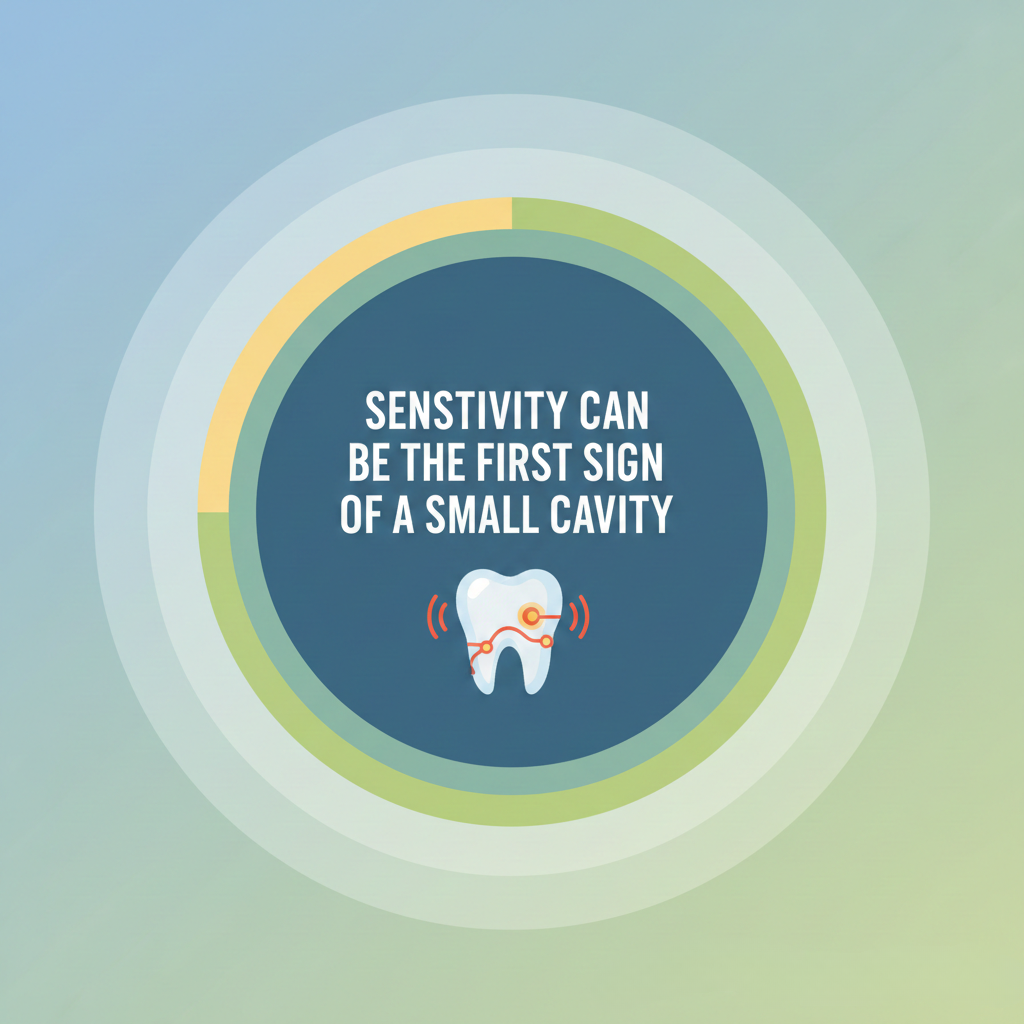
Emma’s exam revealed a small cavity hiding between two teeth, nothing dramatic, but enough to expose dentin and trigger pain. Cavities do not always announce themselves with constant aching. Sometimes, sensitivity is their first whisper.
Old fillings can also play a role. Over time, they can wear down or develop tiny gaps. Temperature changes sneak through those spaces, irritating the nerve underneath. This is why sensitivity sometimes appears years after dental work, catching people completely off guard.
Addressing these issues early keeps treatment simple. A small filling now is very different from a more involved procedure later. This is also where general dentistry services focused on early detection can save both discomfort and cost over time.
Grinding, Stress, And The Teeth You Use At Night
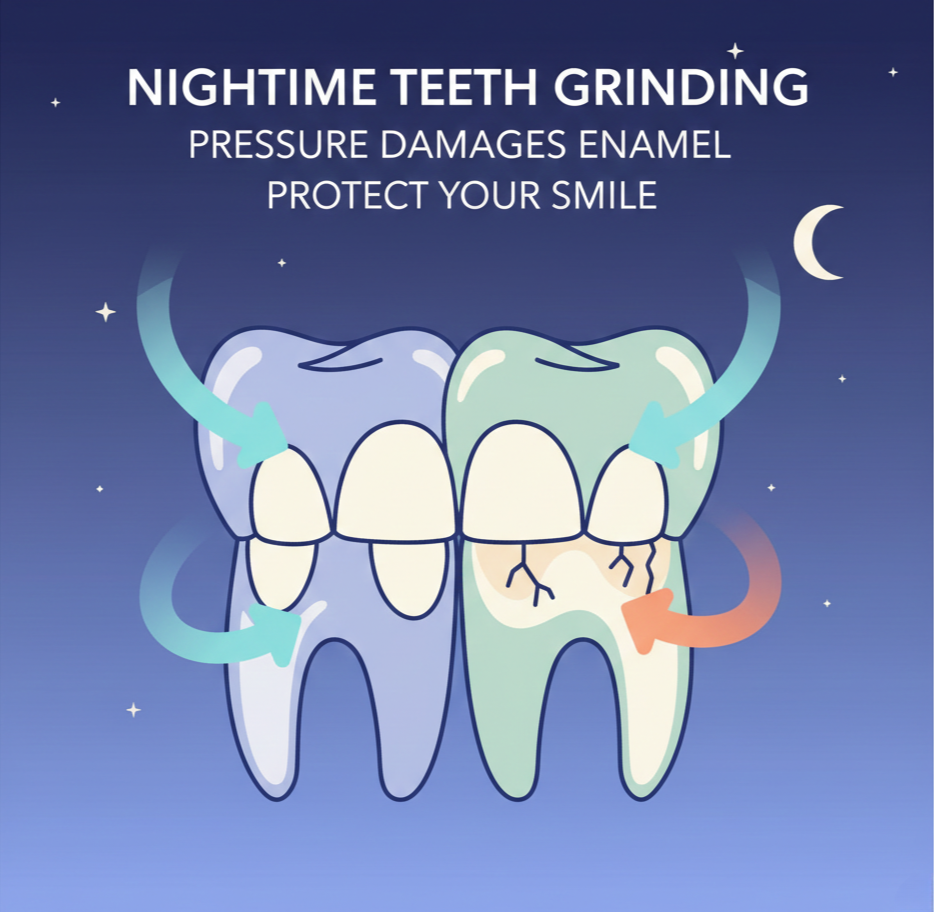
One detail Emma laughed about, nervously, was learning she clenched her teeth at night. Stress has a sneaky way of showing up in your mouth. Grinding and clenching wear down enamel and create micro-cracks that you cannot see but definitely feel.
These tiny cracks act like open doors for temperature and pressure. The result is sensitivity that feels random and frustrating. A custom night guard can protect enamel and reduce symptoms significantly, often improving sleep quality at the same time.
We see this often with patients juggling busy schedules and high stress. The mouth remembers what the mind tries to ignore.
What Emma Learned About Relief And Long-Term Care
After her appointment, Emma felt lighter. Not just because the sensitivity had an explanation, but because she had a plan. A small filling, a gentler brushing routine, and a recommendation for sensitivity toothpaste made a noticeable difference within weeks.
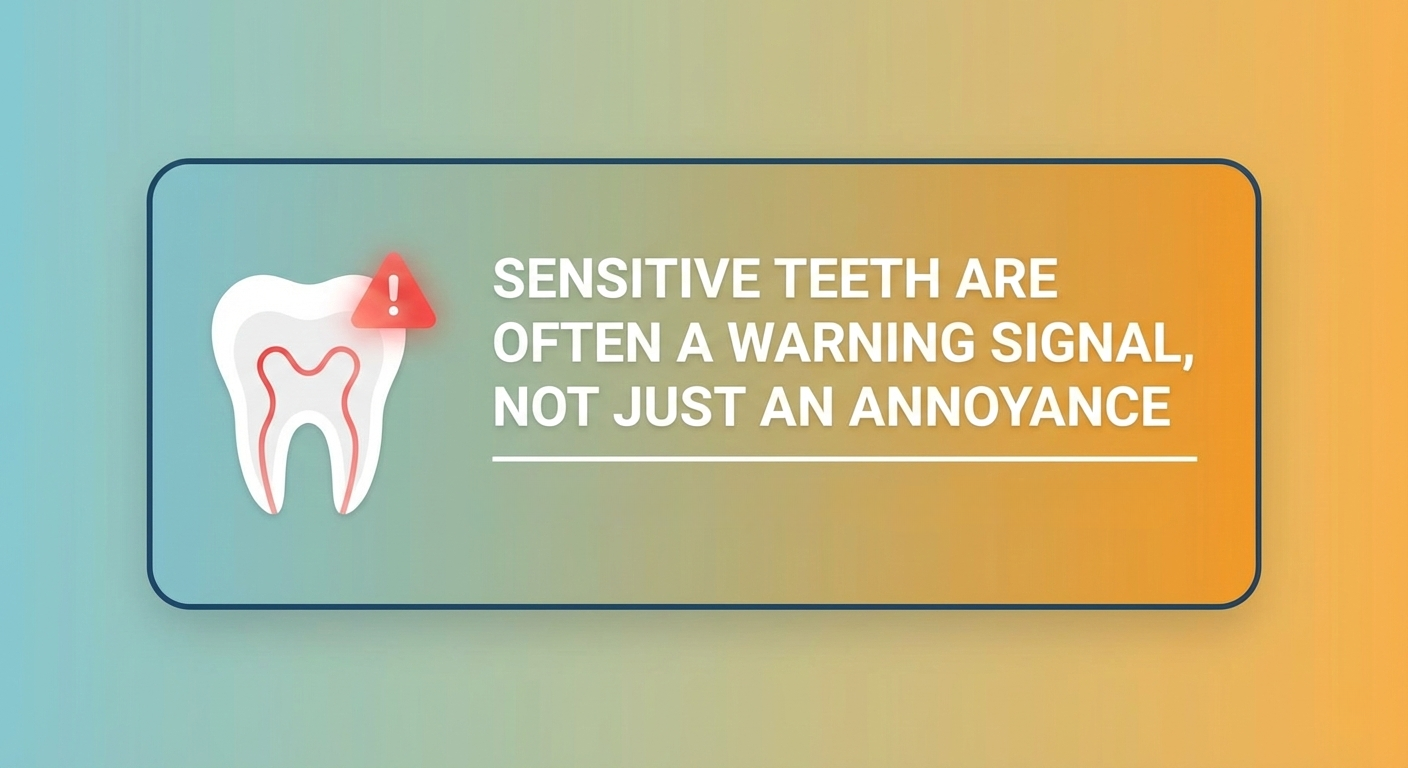
She also learned something important. Sensitive teeth are not something you just “live with”. They are your body’s way of asking for attention. Whether the cause is enamel wear, gum recession, cavities, or grinding, there is almost always a path forward.
If you are feeling that sharp zing, or even just wondering why one tooth feels different than it used to, you deserve answers that feel calm and honest. Exploring care options through general dentistry or cosmetic dentistry services can help you protect your smile for the long run.

A Gentle Next Step If Your Teeth Are Talking
Emma left her appointment feeling heard, not rushed. That is how dental care should feel. If your teeth have been sending you signals, even quiet ones, it might be time to listen. A thoughtful evaluation can turn uncertainty into clarity and discomfort into relief.
You can take that next step by scheduling a visit through the contact page and starting a conversation that puts your comfort first.
Categories:
FAQ
Why Are My Teeth Suddenly Sensitive All At Once?
Sudden sensitivity often means something has changed, like enamel thinning, gum recession, or a new cavity. Stress-related grinding can also trigger symptoms quickly. A dental exam can pinpoint the cause before it worsens.
Can Sensitive Teeth Go Away On Their Own?
Mild sensitivity sometimes improves with habit changes, but persistent sensitivity usually needs professional evaluation. Ignoring it can allow small issues to become bigger ones.
Is Tooth Sensitivity A Sign I Need A Filling?
Sometimes, yes. Sensitivity can be an early sign of a cavity or failing filling. Early treatment keeps procedures simple and more comfortable.
Does Insurance Usually Cover Treatment For Sensitivity?
Many insurance plans cover exams and necessary treatments related to sensitivity, especially if decay or gum issues are involved. Our team is always happy to help review coverage details.
What Is The Best Toothpaste For Sensitive Teeth?
Desensitizing toothpastes can be very effective, especially when used consistently. Your dentist can recommend one based on your specific sensitivity cause.
Ready To Schedule Your Visit?
Book Your Dental Appointment Today

Thank you for booking your appointment!
We’ve received your request and will contact you soon to confirm the details. We look forward to seeing you at Method Modern Dentistry!
Oops! Something went wrong while submitting the form.
Related Blog Posts
Stay Informed with Expert Insights & Tips About Dental Care

My Tooth Keeps Hurting in the Holidays — Is It Time to Get a Crown or Bridge?
Discover why that little bite‑pain during the holidays might deserve action now — and how you could be losing dental benefits if you wait.
12.3.2025
Read More 
Thanksgiving Tooth Troubles? Enjoy the Feast Without the Pain
Thanksgiving should taste like comfort—not tooth pain. Here’s how to handle a sudden zing, enjoy the feast, and choose the right fix that lasts.
11.7.2025
Read More Get Directions to Our Dental Office in Alpharetta
Get Started on Your New Smile Today!
Book your visit today and start your journey toward a brighter, healthier smile. Our team is here to help you feel confident every step of the way.